The 15 Best Keyword Rank Checker & Tracker Online Tools (2026)
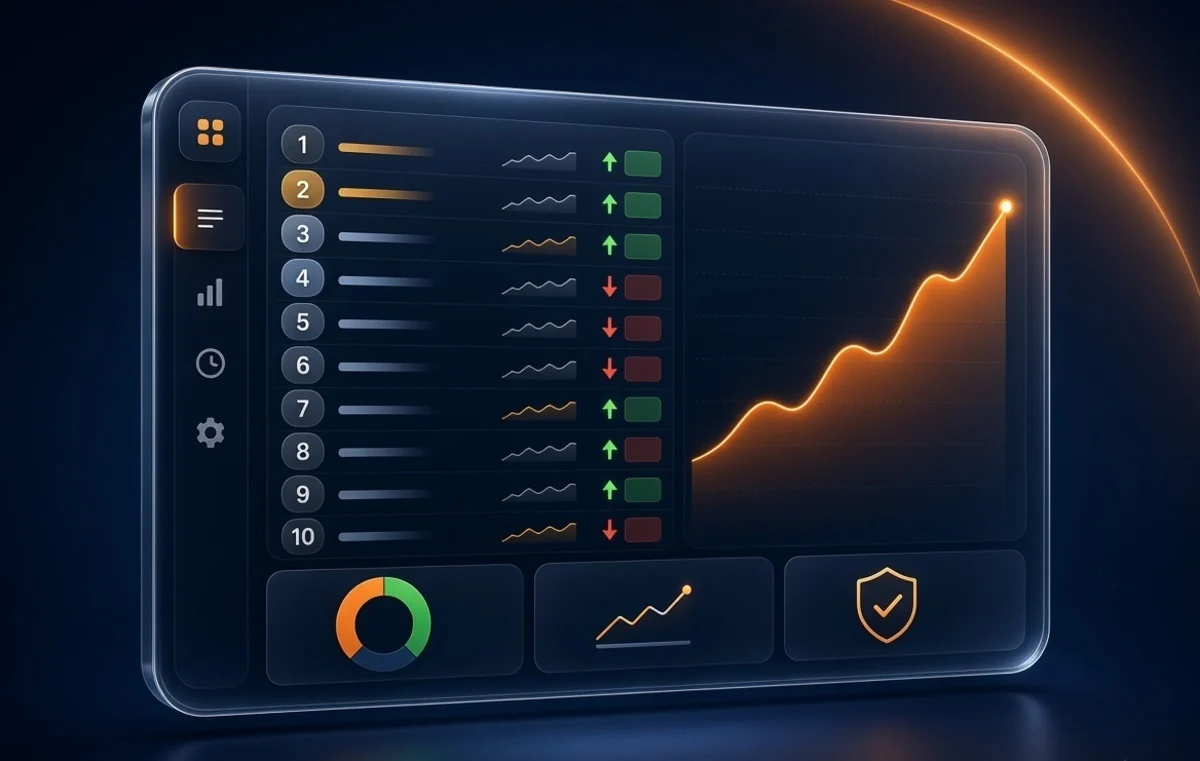
You built the content. You did the SEO. Now the only question that matters is: where do your pages actually rank? A keyword rank checker answers that question in seconds. A keyword rank tracker watches your rankings every day and shows you what is moving. Below are the 15 best keyword rank checker and tracker tools in 2026 — with verified prices, AI tracking support, and clear recommendations based on what you actually need.
Keyword rank tracking shows whether your SEO efforts are actually working. It helps you see which pages are rising or falling, how you compare with competitors, and whether AI Overviews are citing your content. Without tracking, most ranking decisions are based on guesswork.
Our Top Picks
Semrush
Full SEO suite with strong daily position tracking, competitor data, and AI Overview tracking.
Try Semrush → Best valueSE Ranking
2,000 daily keywords from $129/mo. Strong white-label options and solid AI Overview tracking.
Try SE Ranking → Best budget AI trackingZutrix
One of the cheapest ways to track AI Overviews and AI answers along with classic rankings.
Try Zutrix → Best for local + AINightwatch
City and postcode-level tracking plus AI citation visibility in one tool.
Try Nightwatch → Best for speedAccuRanker
Fastest on-demand and hourly checks. Ideal for launches and migrations.
Try AccuRanker → Best free unlimitedSEO PowerSuite
Genuinely free unlimited desktop rank tracker. Tracks 700+ search engines.
Try SEO PowerSuite → Best free (own site)Google Search Console
Official free data for your own site. Average positions and up to 16 months of history.
Open Search Console → Easiest to useMangools SERPWatcher
Simple, clean interface with solid tracking and a more affordable entry point.
Try Mangools →We reviewed each tool as of October 2026 using the following criteria:
- Accuracy and update frequency (daily, weekly, or on demand)
- Location and device tracking (city-level, mobile, and desktop)
- AI Overview and SERP feature tracking
- Cost per keyword and quality of reporting
Prices were checked directly on each tool’s pricing page. We focused on tools useful for ongoing rank tracking, not just one-time checks.
Keyword Rank Checker vs. Rank Tracker: What’s the Difference?
People use these two terms interchangeably, but they are not the same thing. Understanding the difference helps you pick the right tool the first time.
A keyword rank checker answers a one-time question: “Where does my page rank for this keyword right now?” You type in a keyword and a domain, and the tool shows the current position. Free rank checkers like SmallSEOTools work this way. They’re perfect for a quick spot check.
A keyword rank tracker answers an ongoing question: “How are my rankings moving over time?” It checks your keyword positions on a schedule — usually daily — stores the history, and shows trends, gains, and drops. Most trackers also monitor competitors, mobile vs. desktop positions, and local rankings.
Here’s the good news: every paid tool in this list does both jobs. You check current positions whenever you want, and the tracker keeps the history for you automatically. That’s why the two terms appear together throughout this guide — and why one subscription usually covers every rank-checking job you’ll ever have.
Before you dive into tools, remember the fundamentals that rankings depend on: create helpful, original content people actually want, keep keyword use natural, credit sources, and use licensed assets. Google’s own guidance on creating helpful, reliable, people-first content still matters more than any tracker. Rank trackers show you the results of these practices; they don’t replace them.
The table above gives the fast overview of all 15 tools. Below, each one is covered in more detail — what it does better than the others, one honest limitation, and the price we verified in October 2026.
How to Check Your Keyword Rankings
- Use Google Search Console for free average position data on your own site.
- For exact daily positions, use a rank tracker such as SE Ranking, Semrush, or Wincher.
- Track both mobile and desktop, and set the correct city or country.
- Review rankings at least weekly. Daily checks are useful for important keywords or during launches.
15 Best Keyword Rank Checker & Tracker Tools
One clear view — what each tool is actually good at, plus pricing, update frequency, and AI tracking. Links go to official sites or affiliate partners.
| # | Tool | Best for / Real glimpse | Starting price* | Updates | AI tracking |
|---|---|---|---|---|---|
| 1 | Semrush | All-in-one SEO suite Daily tracking + competitor data + site audits. Expensive entry. |
$139.95/mo | Daily | Yes |
| 2 | SE Ranking | Best value full suite 2,000 keywords daily on the entry plan. Strong white-label options. |
$129/mo | Daily | Yes |
| 3 | Ahrefs | Why rankings moved Links ranking data to the strongest backlink index. Weekly updates on Lite. |
Check site | Weekly (Lite) | Limited |
| 4 | AccuRanker | Speed (on-demand) Fastest hourly / on-demand checks. Ideal for launches and migrations. |
$109/mo | On demand | Yes |
| 5 | Mangools SERPWatcher | Easiest interface Friendly dashboard and good budget bundle. |
Budget | Daily/Weekly | No |
| 6 | Wincher | Simple daily tracking Clean dashboard and alerts without complexity. |
€49/mo | Daily | No |
| 7 | Nightwatch | Local + AI citations Postcode-level tracking plus AI visibility. Unlimited seats. |
€79/mo | Daily | Yes |
| 8 | ProRankTracker | Lowest cost at scale Daily updates + AI Rank Tracking. Dated interface. |
$13.50/mo | Daily | Yes |
| 9 | SEO PowerSuite | Unlimited free (desktop) Free unlimited keywords. Tracks 700+ engines. You run the checks. |
Free | You control | No |
| 10 | Advanced Web Ranking | White-label reports Strongest enterprise-style reporting. Daily checks. |
$99/mo | Daily | Yes |
| 11 | SEOScout | GSC data unlimited Unlimited keywords via Search Console. 2–3 day lag. |
Free tier | 2–3 day lag | No |
| 12 | RankWatch | Agency client portals White-label dashboards and client reporting. Broader than a pure tracker. |
$29/mo | Daily | No |
| 13 | Zutrix | Budget AI visibility Cheapest way to get AI tracking across many models. |
$19/mo | Weekly | Yes |
| 14 | Moz Pro | Beginner-friendly suite Trusted brand. Weekly updates on lower plans. |
Check site | Weekly | Limited |
| 15 | Google Search Console | Free official data Official average positions for your own site. No competitors. |
Free | 2–3 day lag | No |
*Prices verified October 2026 on vendor pricing pages. Affiliate links are marked accordingly. Some tools do not have affiliate programs.
#1. Semrush Position Tracking — best all-in-one SEO suite
Best for: teams that want rank tracking inside a complete SEO platform.
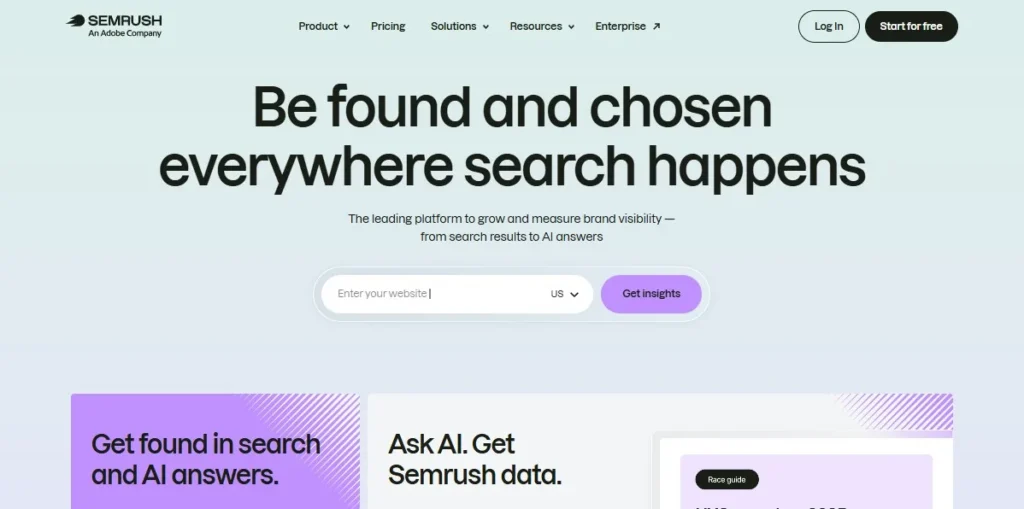
Semrush is the most complete package on this list. Its Position Tracking tool checks your keyword rankings daily, monitors every important SERP feature, and tracks competitors side by side with your own positions.
The real value is everything around the tracker. Keyword research, site audits, backlink analysis, and competitor research live in the same dashboard. When a ranking drops, you can investigate the cause without switching tools.
Most of the stronger tools in this list also let you track competitor rankings, so you can see which keywords they are winning and which pages are ranking for them.
Pros:
- Daily updates plus SERP feature and AI visibility monitoring
- The deepest competitor data of any suite here
- Industry-standard reporting clients recognize instantly
Cons:
- At $139.95/month for the Pro/SEO plan (500 tracked keywords), it’s the most expensive entry point on this list
- More platform than a solo blogger needs — see Wincher or Mangools for lighter budgets
Pricing: From $139.95/month, with a free trial available.
#2. SE Ranking — best value full suite
Best for: small agencies and site owners who want near-Semrush depth at a lower price.
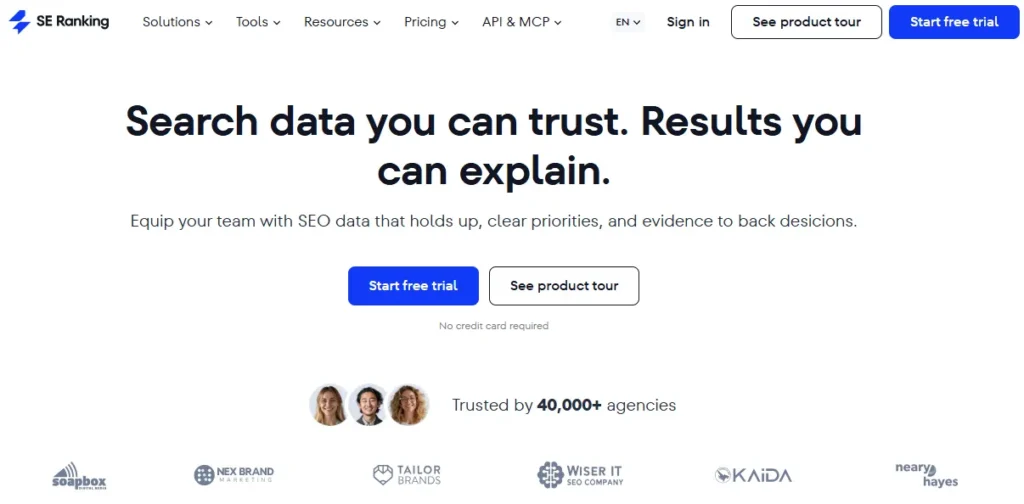
SE Ranking is the value pick of this roundup. The Core plan tracks 2,000 keywords daily — four times Semrush’s 500 — and includes white-label reporting on every plan (via Agency Pack options), something most competitors reserve for their top tiers.
Recent updates made it genuinely modern: rank tracking now covers 37 SERP features, including AI Overviews, and the same subscription covers keyword research, site audits, and backlink checks. Core also includes 100 AI prompts tracked daily.
If AI visibility is also a priority, see our guide to the best AI Overview tracking tools.
One honest note: SE Ranking restructured its plans, and its old $65 entry tier is gone. Core starts at $129/month (about $103/month billed annually). That’s still the best cost-per-keyword ratio of any full suite.
Pros:
- 2,000 daily-tracked keywords on the entry plan
- White-label reporting options — agencies, take note
- Tracks AI Overviews and 36 other SERP features
Cons:
- The 2019-era pricing you’ll read in older articles no longer exists
- Interface is functional, not as polished as Ahrefs or Mangools
Pricing: Core from $129/month ($103.20/month billed annually), 14-day free trial.
#3. Ahrefs Rank Tracker — best for ranking + backlink context
Best for: SEOs who want to know why rankings move, not just that they moved.
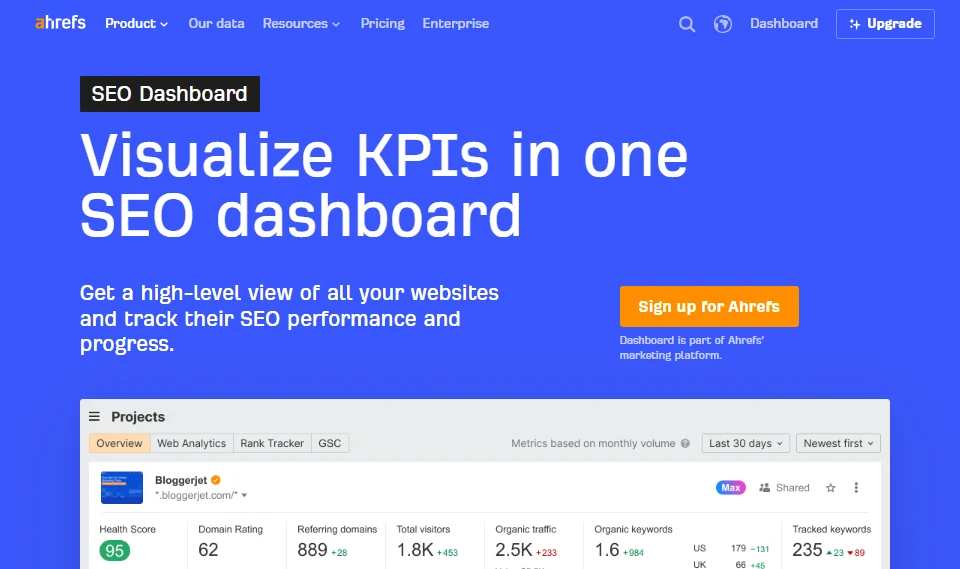
Ahrefs built its reputation on backlink data, and its Rank Tracker connects your positions to that data. When a competitor outranks you, you can open their page and study its backlinks, traffic, and keyword footprint in two clicks.
The Lite plan tracks 750 keywords for $129/month. Note the update frequency: base plans refresh weekly, and daily tracking requires a higher tier — a real limitation next to SE Ranking, which updates 2,000 keywords daily for the same price.
Its Brand Radar index is huge — 470M+ AI prompts, 264M of them AI Overview prompts, refreshed monthly — and it covers AI answer mentions alongside classic rankings. One honest note: independent testing found its Perplexity counts underreport actual mentions, so treat those numbers as directional.
Pros:
- Ranking data plus the industry’s most trusted backlink index
- Brand Radar monitors AI Overviews and AI answer mentions
- Excellent historical graphs for proving long-term progress
Cons:
- Weekly updates on the Lite plan — weak during algorithm updates
- No white-label reporting
Pricing: Lite from $129/month. Ahrefs Webmaster Tools offers a free version for verified own sites.
#4. AccuRanker — best real-time rank checker
Best for: anyone who needs rankings now — launches, migrations, agency clients.
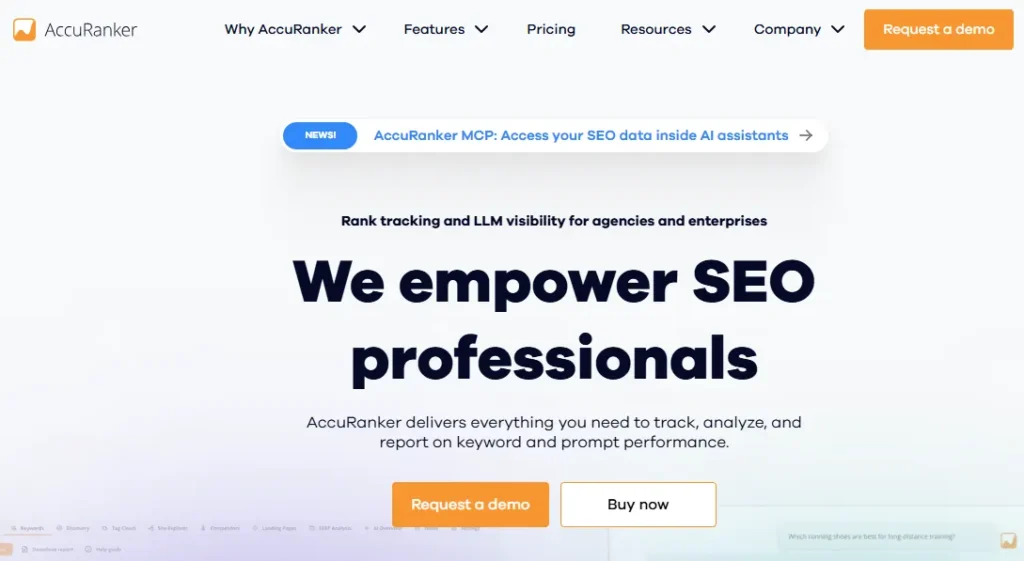
Most trackers check positions once a day, overnight. AccuRanker checks them on demand, up to hourly — which is why it’s the answer to “what’s the best hourly rank checker tool?” that so many people search for.
During a site migration or a product launch, the difference between overnight data and on-demand data is the difference between reacting in an hour or reacting tomorrow. AccuRanker is built exactly for that pressure, and large agencies are its core market.
Its reporting has AI-era teeth too: Share of Voice 2.0 weights each keyword by search volume and adjusts for what searchers actually see — AI Overviews, featured snippets, local packs — plus a dedicated AI Share of Voice view across AI channels.
Pros:
- On-demand and hourly refreshes — the fastest tracker here
- Granular location tracking with a clean, fast interface
- Trusted by large agencies for exactly one job: accurate tracking, fast
Cons:
- No keyword research or site audit — pair it with a free tool like Search Console
- Above-average pricing; overkill for a small stable site
Pricing: From $109/month.
#5. Mangools SERPWatcher — best budget bundle for freelancers
Best for: freelancers and small site owners who want a friendly, affordable toolkit.
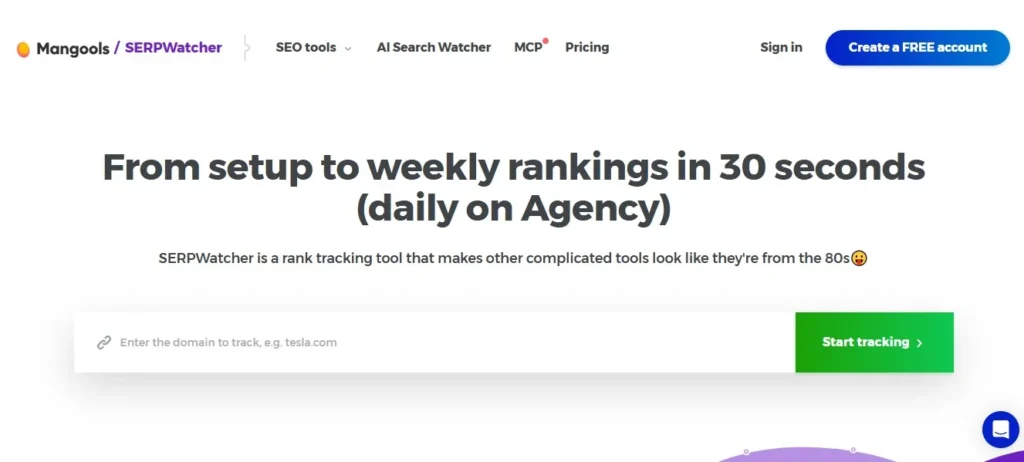
SERPWatcher is the rank tracker inside the Mangools bundle, and it’s the easiest tracker in this list to learn. You add a domain, paste keywords, and watch a color-coded dashboard update itself.
Its Performance Index is a smart touch: instead of a raw average position, it weights each keyword by search volume, so you see progress where it actually matters.
The trade-off is update frequency: the Basic plan (200 tracked keywords) refreshes weekly, and daily updates only arrive on the Agency plan. And yes — the company is called Mangools, not “Mongols,” as some older articles have typo’d it.
Pros:
- Friendliest interface of any tracker here
- Five tools in one bundle: rank tracking, keyword research, SERP analysis, backlinks, and site analysis
- Genuinely affordable on annual billing
Cons:
- Weekly updates on the entry plan
- Only 200 keywords on Basic — fine for one site, tight for a portfolio
Pricing: Basic from $61/month, or about $37.70/month billed annually. 10-day free trial.
#6. Wincher — best simple daily tracker
Best for: small teams that want daily rank tracking without a learning curve.
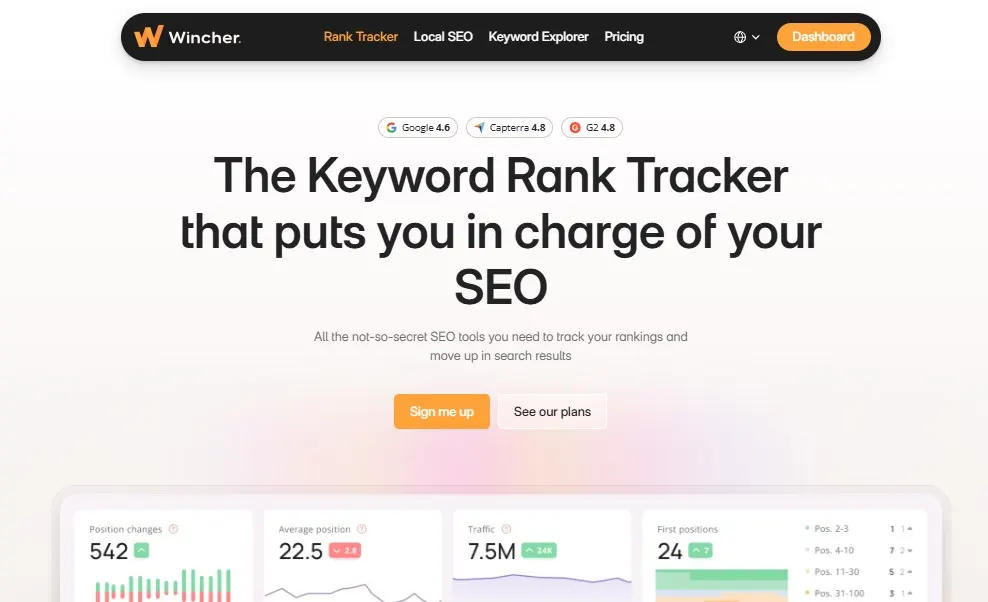
Wincher does one job and does it cleanly: daily rank tracking. The Basic plan covers 500 keywords across up to 10 websites — a generous allowance at this price — and the dashboard shows movement at a glance, with email alerts when positions change.
It has grown beyond a pure tracker, adding keyword research, a SERP benchmark tool, and white-label reporting on higher tiers. There’s no AI Overview tracking yet — if that matters to you, look at Zutrix or SE Ranking.
Pros:
- Daily updates on every plan, including the cheapest
- White-label reports on higher tiers, plus a Yoast integration for WordPress users
- Local rank tracking included
Cons:
- No AI visibility tracking
- Not the choice for very large keyword sets
Pricing: Basic from €49/month (500 keywords, 10 sites). 7-day free trial.
#7. Nightwatch — best local tracking plus AI citation visibility
Best for: agencies that want postcode-level local rankings and AI visibility in one platform.
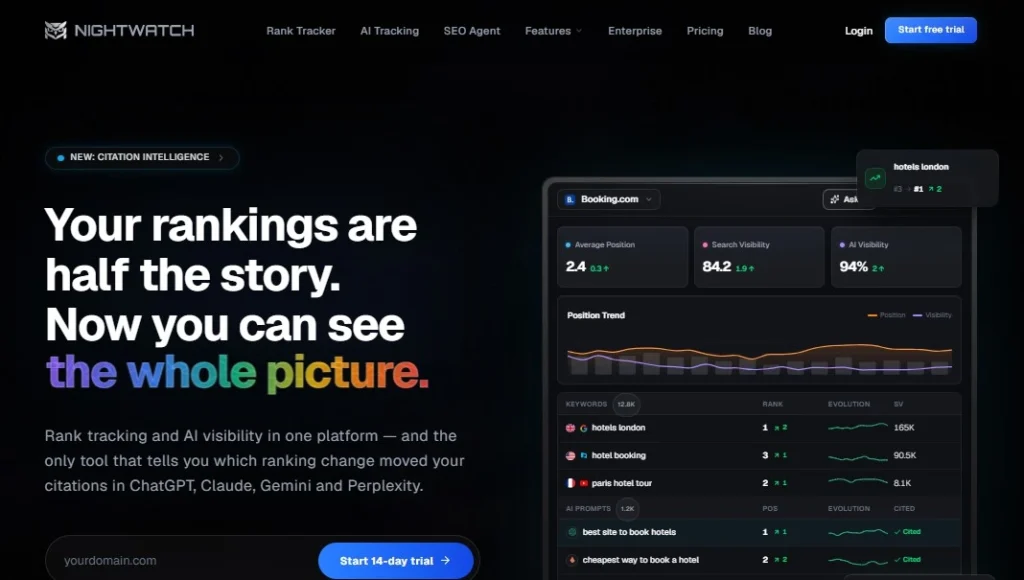
Nightwatch rebuilt its platform for the AI era. Every plan now includes daily rank tracking, city and postcode-level local data, a Citation Intelligence feature that shows how AI answers cite your brand across ChatGPT, Claude, Gemini, Perplexity, and Google AI Mode and AI Overviews — plus an SEO Agent that runs tasks for you. Team seats are unlimited; you pay for keywords, not team size.
One honest warning: that rebuild moved Nightwatch upmarket. The Starter plan now costs from €79/month (roughly $86, often shown on annual billing; monthly is higher) with 500 keywords and 50 tracked AI prompts. Older articles still quoting “$39/month” are quoting a plan that no longer exists.
Its interface is data-dense — less beginner-friendly than Mangools — but the local-plus-AI combination is unique at this price.
Pros:
- City and postcode-level local tracking, daily, on every plan
- AI visibility and Citation Intelligence included — not sold as an add-on
- Unlimited team seats on all plans
Cons:
- No longer the budget pick it used to be — €79/month to start
- Denser interface; not ideal for absolute beginners
Pricing: Starter from €79/month (500 keywords, 50 AI prompts). 14-day free trial.
#8. ProRankTracker — cheapest cost per keyword at scale
Best for: tracking thousands of keywords without enterprise pricing.
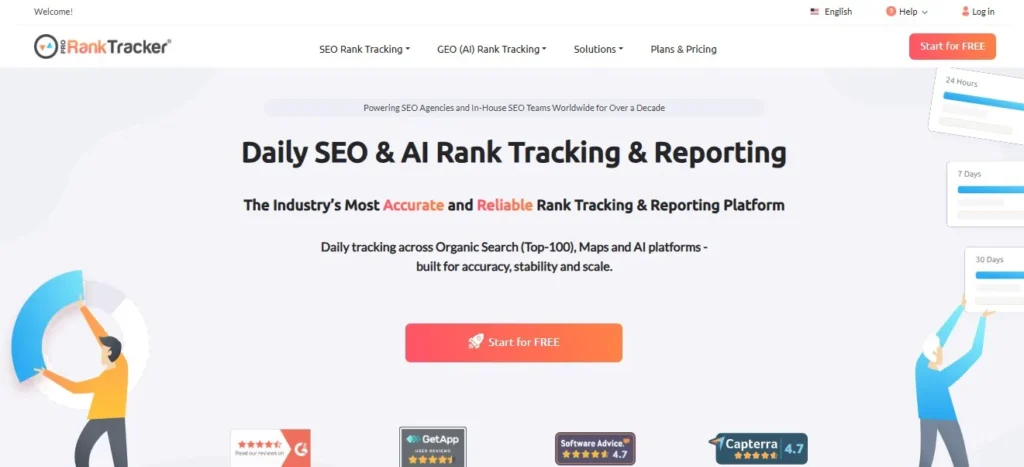
ProRankTracker rarely headlines roundups, which is a shame: its granular plan structure gives it the lowest cost per keyword in this list, starting at $13.50/month.
Rankings update daily, and the reports are solid. It’s a tracking specialist, though — like AccuRanker, it won’t replace keyword research or audits.
New for 2026: AI Rank Tracking. It monitors your visibility inside Google AI Overviews and AI Mode, plus ChatGPT, Gemini, Perplexity, and Copilot — and it flags brand mentions even when the AI answer doesn’t link to you. One costing quirk: ProRankTracker counts usage in “Terms,” and an AI check uses two Terms per keyword, so 1,000 Terms covers 500 AI prompt combinations (or a mix of AI and classic checks).
Pros:
- Lowest entry price on this list
- Flexible keyword quotas as you scale
- Daily updates and decent mobile apps
- AI Rank Tracking across Google AI Mode and four major AI platforms
Cons:
- Dated interface
- No all-in-one features
Pricing: From $13.50/month.
#9. SEO PowerSuite Rank Tracker — best rank tracking software (unlimited keywords)
Best for: unlimited keyword tracking — including a genuinely free desktop version.
Rank Tracker by SEO PowerSuite is the answer to two popular searches at once: “best keyword ranking software” and “unlimited keyword rank tracking.”
Unlike the web-based cloud tools above, this is desktop software for Windows, Mac, and Linux. The free version has no keyword cap — a claim no cloud tracker can make — and the paid version adds scheduled checks, white-label reports, and deep local tracking. It also tracks 700+ search engines, including Yandex and Bing, which makes it the go-to pick for multi-engine campaigns.
The cost of the desktop model: you run checks yourself (or schedule them on your machine), and there’s no shared cloud dashboard for teams.
Pros:
- Unlimited keywords — free forever in the desktop version
- Tracks Google, Bing, Yandex, and hundreds of other engines
- Yours for a one-time annual license, not a monthly meter
Cons:
- Desktop-only; your machine does the work
- The interface takes a day to learn
Pricing: Free version with unlimited keywords; Professional from $149/year. Please note, SEOPowersuite, complete package can also be used as a complete package, and also specifically for RankTracker appliation. Please also check the SEOPowersuite package.
#10. Advanced Web Ranking — best enterprise reports
Best for: agencies and enterprises that live and die by client reports.
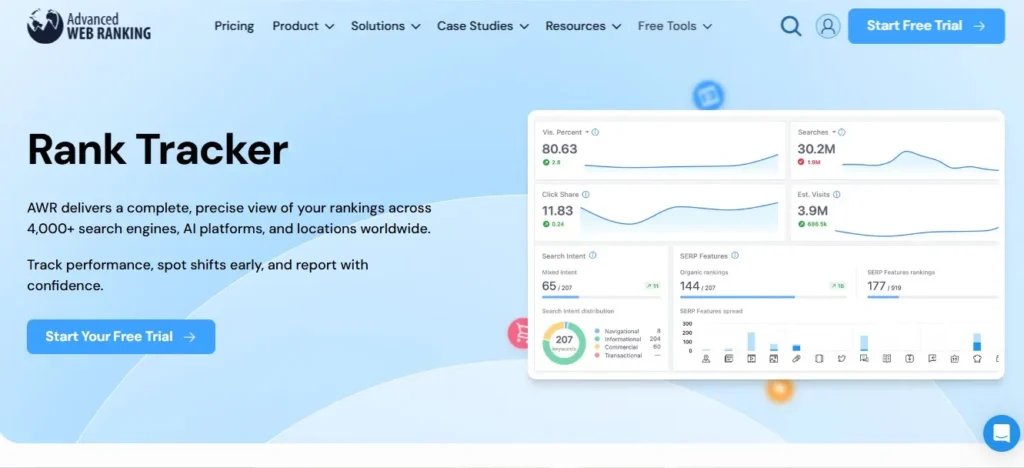
AWR has been ranking websites since 2002, and it shows in the reporting: deeply customizable, white-label, scheduled, and exportable in almost any format. The entry plan’s keyword allowance is generous, and daily checks are standard.
It’s a professional tool at a professional price — smaller sites should start with Wincher and graduate here when client reporting demands it.
AWR has also kept pace with AI search: AI Search Visibility adds brand mentions, citations, and an “AIO Citation Rank” across Google AI Mode, AI Overviews, ChatGPT, Gemini, Claude, and Perplexity — so client reports can show classic and AI visibility side by side.
Pros:
- The most flexible white-label reporting in the category
- Daily updates across desktop, mobile, and local results
- 30-day free trial — the longest here
Cons:
- More than a freelancer needs
- Interface shows its age in places
Pricing: From $99/month.
#11. SEOScout — best unlimited keywords via Search Console
Best for: unlimited rank “tracking” for sites already verified in Google Search Console.
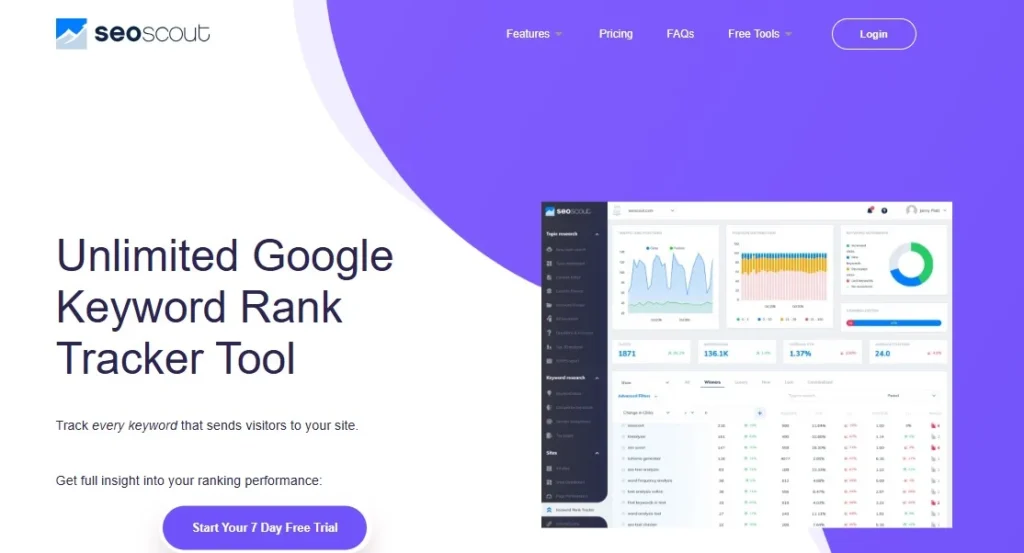
SEOScout takes a clever shortcut: instead of scraping Google, it connects to your Search Console account and turns its position data into a full tracking dashboard — with unlimited keywords.
The trade-off is honesty: Search Console data lags by 2–3 days and shows averages, not exact snapshots. For a content-heavy site that wants every keyword covered cheaply, that trade is excellent. For launch-week precision, use AccuRanker.
Pros:
- Unlimited keywords on every plan
- Surfaces rising/falling keywords and low-CTR pages automatically
- Includes a content editor and SEO A/B testing on higher plans
Cons:
- 2–3 day data lag
- No competitor tracking — Search Console only shows your own site
Pricing: From $49/month. 7-day free trial.
#12. RankWatch — best for agency client monitoring
Best for: agencies managing many client sites who want tracking bundled with SEO reporting.
RankWatch tracks daily keyword positions, city-based local rankings, and competitor movements, with a fully white-label client dashboard — its core use case since the beginning.
It has grown into a broader SEO platform, which helps agencies bundle services, though the tracker itself is no longer the sharpest specialist on this list (AccuRanker, #4, holds that title).
Pros:
- City-level daily tracking with white-label client portals
- CEO-style summary dashboards for stakeholders
- One of the most searched-about trackers — plenty of third-party comparisons exist
Cons:
- The wider platform adds complexity
- Pricing tiers need careful reading before you commit
Pricing: From about $60/month — confirm current plans on their site.
Looking for other options? Check our list of the best RankWatch alternatives.
#13. Zutrix — best budget tracker with AI visibility
Best for: budget buyers who want AI visibility included, not sold separately.
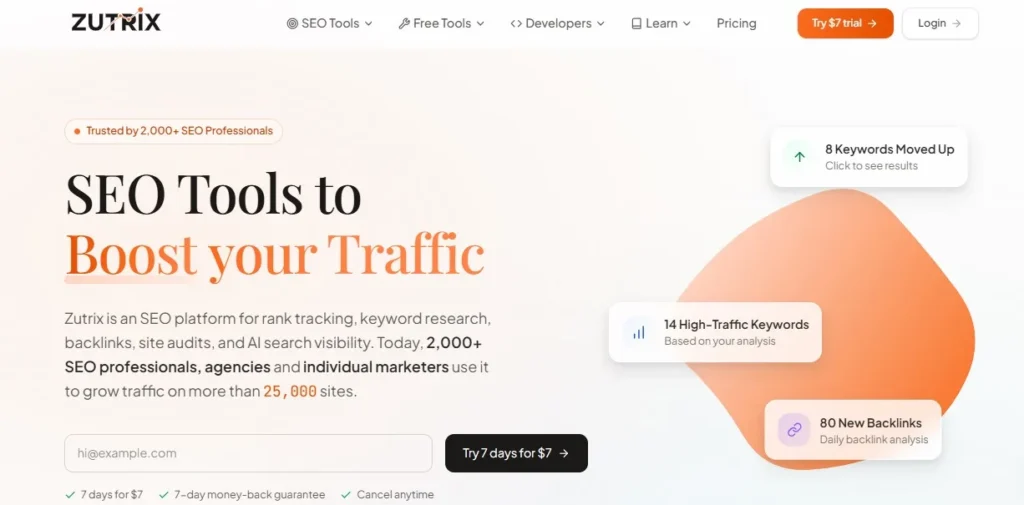
Zutrix is the newest-feeling tracker here: plans from $19/month with SERP screenshots as proof of every position (“proof of ranking”), real-time alerts, and — unusually at this price — AI visibility across 8 AI models (ChatGPT, Claude, Gemini, Perplexity, Grok, and more), included on every plan and checked weekly.
Two honest trade-offs: base plans check rankings weekly, not daily — if you need daily checks, confirm the cost of the daily frequency option on their plans page first — and the AI checks run weekly too.
For a small business watching how AI answers reshape its SERPs, it’s still the most future-proof budget option on this list.
Pros:
- AI visibility across 8 AI models included on the entry plan
- SERP screenshot proof for every keyword
- Real-time ranking alerts
Cons:
- Weekly checks on base plans — daily costs extra
- A smaller brand — fewer integrations and third-party resources
Pricing: Starter from $19/month (250 keywords, weekly checks). 7-day trial for $7.
#14. Moz Pro — best brand-trusted reporting
Best for: teams that want a household-name SEO suite with simple reporting.
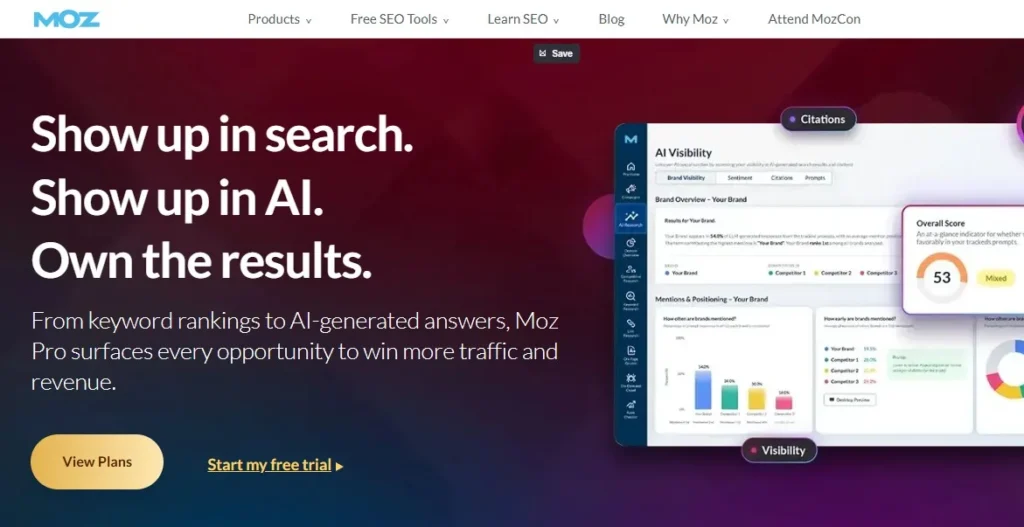
Moz Pro is the veteran here. Its rank tracking covers positions, competitors, and visibility, wrapped in the friendliest learning curve of the big three suites (Semrush, #1, and Ahrefs, #3, are deeper tools).
Ranking updates are weekly on lower tiers, and the price sits between SE Ranking (#2) and Semrush. It’s a solid, safe choice — just not the sharpest tracker per dollar in 2026.
Pros:
- Most beginner-friendly of the major suites
- 30-day free trial — full access, no rush
- Integrations and educational content few rivals match
Cons:
- Weekly updates on lower tiers
- Cost per tracked keyword trails SE Ranking (#2)
Pricing: From $99/month. 30-day free trial.
#15. Google Search Console — best free keyword rank checker
Best for: every website on earth, honestly. Start here, always, before paying anyone.
Google Search Console is free, official, and reports the positions Google itself measured — no third-party scraping, no estimate. The Performance report shows impressions, clicks, average position, and CTR for every keyword your site appears for, with up to 16 months of history. Google explains exactly how average position is calculated (it uses the topmost position of your property for each impression and averages those values) in its Search Console Help documentation.
Its limits explain why the other 14 tools exist: data arrives every 2–3 days, positions are averages, there’s no competitor tracking, and keyword labels get more anonymized every year. But it now also shows when your pages appear in AI Overviews — free insight the paid tools charge for.
Pros:
- Free forever, with Google’s own data
- Up to 16 months of ranking history
- AI Overview appearance data included
Cons:
- 2–3 day lag, average positions
- Only your own site; no competitor data
Pricing: Free.
Set up Google Search Console →
Which Rank Tracker Should You Pick?
Match the job you need done — not just the brand name.
| If you need… | Pick | Why |
|---|---|---|
| More keywords per dollar + full suite | SE Ranking | 2,000 daily keywords on the entry plan with white-label included |
| Deepest white-label client reports | Advanced Web Ranking | Most customizable reporting in the category |
| Local rankings + AI citations together | Nightwatch | Postcode-level tracking plus AI visibility |
| Rankings during a launch or migration | AccuRanker | On-demand checks, up to hourly |
| Simple daily tracking without complexity | Wincher | Clean interface and short learning curve |
| AI visibility on a tight budget | Zutrix | AI tracking across multiple models from $19/mo |
| Lowest cost per keyword at scale | ProRankTracker | Daily updates and AI tracking at a very low entry price |
| Completely free unlimited tracking | SEO PowerSuite Rank Tracker | Free desktop version with unlimited keywords |
| Official Google data for your own site | Google Search Console | Free average positions straight from Google |
More Rank Tracking Options
More Keyword Rank Tracking Tools Worth Considering
The top 15 covers most needs, but honesty requires a second tier. These ten didn’t make the main list — and each one has a specific reason it sits there. If your situation matches what a tier-two tool does best, it may beat our top picks for you.
#16. Ubersuggest — the budget all-rounder for beginners. Neil Patel’s toolkit bundles keyword research, site audits, and rank tracking from $29/month, and its lifetime deals ($290+) make it uniquely cheap over the long run. The catch: the Individual plan tracks only 125 keywords per domain. If tracking is your priority, Zutrix (#13) gives you more for less — Ubersuggest wins only if you want one simple, cheap tool for a bit of everything.
#17. Serpstat — the mid-market suite. From around $50–59/month, Serpstat bundles rank tracking with keyword research, audits, and backlink data. It’s good — just not the best at any single job. SE Ranking (#2) beats it on daily tracking volume and white-label reporting at a similar price, which is why Serpstat dropped out of our previous top 15.
#18. CognitiveSEO — still alive, no longer a top pick. CognitiveSEO still sells plans and its rank tracking still works, but its backlink exploration now runs on Majestic’s data, and its development pace has visibly slowed. We demoted it rather than removed it — if you want unnatural-link detection alongside tracking, it remains a valid niche choice.
#19. WhiteSpark — the local SEO specialist. WhiteSpark pairs rank tracking with Google Business Profile optimization and citation building. If citations and local maps are your actual job, it belongs on your shortlist. As a pure tracker, Nightwatch (#7) matches its local depth — what you’re buying from WhiteSpark is the citation-building workflow around the rankings.
#20. AgencyAnalytics — reporting first, tracking second. If you run an agency and your real pain is multi-channel client dashboards — SEO, ads, and social in one place — AgencyAnalytics bundles rank tracking into a polished reporting platform. No dedicated tracker matches its reporting; it just can’t match a dedicated tracker’s tracking.
#21. SEO Tester Online — the European all-in-one. From roughly €26/month, this Italian suite covers rank tracking, audits, and content analysis at a fair price. Solid in the EU market; globally, its rivals simply carry deeper data.
#22. WhatsMySerp — simple and cheap. Plans from around $29/month, with a handy Chrome extension that shows positions while you browse. It remains a fine minimal option — but Wincher (#6) and Zutrix (#13) are its stronger siblings at the same price.
#23. DinoRANK — the multilingual contender. From about €33/month, DinoRANK offers geolocated daily rank tracking, SEO audits, and unusually good internal-linking and content tools. It’s especially strong for Spanish-language and broader European markets — and it’s the tool many readers ask about as “Dinorank.”
#24. Nozzle — the SERP data firehose. Nozzle captures the entire SERP — every feature, every competitor, pixel-level positions — and prices by data volume (from around $59/month). For data-heavy teams analyzing the whole results page rather than just their own position, it’s a specialist weapon.
#25. Ranktracker — yes, the one literally called that. ranktracker.com offers credible tracking with a clean interface and a free trial. It misses the top 15 for two reasons: its budget lane is crowded (ProRankTracker #8 and Zutrix #13 edge it on price and features), and its name is endlessly confused with SEO PowerSuite’s Rank Tracker (#9) — not its fault, but a real usability problem for buyers.
Hidden Gems: Underrated Keyword Rank Trackers Worth Trying
These five rarely appear in roundups. Each earns a mention because it does something the big names don’t.
Serpple — full daily tracking for $19/month. Daily updates on every plan — including the cheapest — plus AI keyword suggestions and position-change alerts. Most tools at this price cut the update frequency. Serpple doesn’t. 14-day free trial.
Morningscore — SEO as a game. Morningscore turns rankings into points, quests, and a money-value estimate of your SEO — and it tracks AI visibility across 100 AI prompts. For business owners who find SEO tools intimidating, nothing else makes rank tracking this approachable.
Keyword.com — the AI visibility bolt-on. A precise daily rank tracker (from about $7/month) with an optional AI Visibility module ($24.50/month for 50 credits) that measures your presence in AI answers. Already happy with your tracker but need AI visibility added cheaply? This is the cleanest add-on on the market.
SERPRobot — pay per check, not per month. From $4.99, SERPRobot sells query packs instead of subscriptions. Perfect for variable keyword counts — agencies that check rankings only when reporting, or site owners who verify positions once a month and shouldn’t pay monthly rent for that.
BrightLocal + Local Falcon — the local grid specialists. Every tracker above reports one position per location. That’s fine for national SEO and wrong for local businesses, where you can rank #1 across half a city and #7 across the other half. These two specialize in geogrid scans — hundreds of position checks plotted across a mapped grid of your service area, showing exactly where you’re visible and where you vanish. If local search drives your revenue (plumbers, dentists, restaurants, agencies serving them), this pair does a job none of the 15 general trackers can. Check each vendor’s current pricing on their site before committing.
Bonus: What Real SEOs Say on Reddit
Most SEOs on Reddit agree on a few practical points about rank trackers:
- Daily tracking is worth it only for important keywords. Weekly is fine for the rest.
- Google Search Console is useful, but it is not a replacement for a proper rank tracker if you need exact positions or competitor data.
- Tools that combine classic rankings with AI Overview tracking are becoming more valuable in 2026.
Tools that come up often:
- Wincher is frequently mentioned for simple, affordable daily tracking.
- SEOTesting is praised by SEOs who prefer rankings pulled from their own Search Console data.
- Keyword.com gets recommended for cheaper AI visibility tracking.
- Local SEOs often point to BrightLocal, WhiteSpark, and Local Falcon for geogrid and map pack tracking.
One honest caveat: Reddit leans toward budget tools and solo practitioners. Enterprise teams rarely share their full stack, so treat community opinions as one signal — not the final verdict.
Tools We Considered but Didn’t Include
Popular SEO Tools Not Included in This List (and Why They’re Not Here)
Readers expect certain names in a rank tracker list and ask us why they’re missing. Fair question — here’s the honest reason for each.
- AnswerThePublic — not a rank tracker, at all. It visualizes autocomplete questions around a keyword (those famous “who/what/why” wheels) for content ideation. It cannot check a single ranking. It belongs in a keyword research tools roundup — see our keyword research tools guide — not on this page.
- SpyFu — competitor keyword and PPC history research. Excellent at its job; it does not monitor your positions on a schedule.
- Surfer SEO — a content optimization editor. It grades pages against the current SERP; it doesn’t track them over time.
- Screaming Frog — a technical SEO crawler. Different job entirely, and it shares a category with none of the tools above.
- Rank Math and Yoast — WordPress SEO plugins with basic rank-tracking add-ons. If you’re on WordPress, the better play is a real tracker with a plugin integration — like Wincher (#6), which plugs directly into Yoast.
One boundary case: Ubersuggest is primarily a keyword research tool, but it does include genuine rank tracking — that’s why it sits in the tier above (#16) rather than on this list.
Rank Tracking Tools We No Longer Recommend
This article has been maintained for years — and maintaining means pruning. Every tool below appeared in an earlier version of this page. Here’s exactly what happened to each, so you can skip them and know why.
| Tool | Status (Oct 2026) | Why it left the list |
|---|---|---|
| Alexa Rank Checker | Retired May 2022 | Alexa shut down, and its API stopped working in December 2022. Any article still recommending it is abandoned. |
| SEOProfiler | Closed April 2022 | The platform shut down for good. Some software directories still list it as “buyable” — it isn’t. |
| Traffic Travis | Dormant | No meaningful development in years; every job it did is now done better by a tool in this list. |
| Microsite Masters | Discontinued | Long-standing reports of lag, poor user experience, and unreliable data preceded its quiet end. |
| AuthorityLabs | Absorbed into Traject | Acquired and folded into the Traject suite; it no longer competes as a standalone tracker. |
| DynoMapper | Active — wrong category | It’s a visual sitemap and content-audit tool first; its daily keyword tracking only unlocks on the pricier plans. Buy it for sitemaps, not for tracking. |
| Ispionage | Active — wrong category | PPC ad intelligence and competitor ad libraries. It never seriously tracked organic positions. |
| The Search Monitor | Active — wrong category | Ad monitoring for agencies. Same story — ads, not organic rank. |
| Labrika | Active — refocused | Now an AI content-optimization platform. Useful tool, wrong roundup. |
Demoted, not deleted: CognitiveSEO (#18), Serpstat (#17), and WhiteSpark (#19) moved from the main list into the “worth a look” tier — all three are working products that lost their top-15 spots to sharper competitors, not to time.
A note on why we do this at all: removing tools is a feature of this article, not a flaw. A roundup that never removes anything is a roundup nobody maintains — and unmaintained lists are exactly why you keep finding rank tracker advice from 2020 recommending tools that no longer exist.
The Best Free Keyword Rank Checkers (2026)
Not ready to pay? You have more free options than you might think — and “free rank tracker” is one of the most-searched phrases in this whole topic.
- Google Search Console (#15) — the foundation. Free positions, clicks, and AI Overview appearances for your own site.
- SEO PowerSuite Rank Tracker, free version (#9) — unlimited keywords, desktop checks on demand. The single most generous free tier in this category.
- Ahrefs Webmaster Tools (#3) — free rank and backlink data for sites you can verify.
- SmallSEOTools Keyword Position Checker — a classic free rank checker for up to 10 one-time keyword checks. Great for spot checks, not for tracking.
- Free tiers and trials — Keyword.com’s free plan, AWR’s 30-day trial, and the trials from Semrush, SE Ranking, and Mangools let you run a real comparison for weeks before paying a rupee or a dollar.
One caution: free one-time checkers personalize results. If you’re logged into Google, or the tool checks from a single location, positions can mislead. That’s the core reason paid trackers exist — consistent locations, clean sessions, stored history.
You can also explore our list of the best on-page SEO checker tools.
Unlimited and Real-Time Rank Tracking: What to Look For
Two of the most common searches in this space are “unlimited keyword rank tracking” and “real time keyword ranking.” Here’s what each one actually requires.
Unlimited tracking means no keyword cap. Only two tools here offer it: SEO PowerSuite’s free desktop Rank Tracker (#9), and SEOScout (#11) via Search Console. Everyone else charges per keyword volume — which is why cost per keyword (price ÷ keywords) is the honest number to compare. SE Ranking’s Core plan works out to roughly 6 cents per keyword per month; Semrush Pro lands around 28 cents.
Real-time tracking means fresh positions on demand. Daily updates are the sensible default — intra-day swings are mostly algorithm noise that settles within a few days. But during a site migration, a rebrand, or a product launch, hourly updates (AccuRanker, #4) let you catch a problem the hour it starts instead of the next morning.
Does Rank Tracking Still Matter with AI Overviews?
Fair question — and the reason this article exists in 2026 at all.
AI Overviews now sit above classic results for many queries, and they cite sources. Google’s documentation on AI features and your website confirms that AI Overviews and AI Mode are designed to show supporting links, and that pages must be indexed and eligible to appear in Search to be cited. Those sources are drawn overwhelmingly from pages that already rank well. So the old ranking data hasn’t lost importance — it has become the input that decides who gets cited by AI.
What’s changed is what you need to measure. Position is no longer a proxy for clicks: a #4 result buried under an AI Overview, an ad block, and a featured snippet can earn fewer visits than a #6 sitting under plain blue links. That’s exactly why modern rank tracking now records SERP features, AI Overview appearances, and even visibility in AI chat engines like ChatGPT and Perplexity — the position number alone no longer tells you what you’ll get. SE Ranking (#2), Semrush (#1), and Ahrefs (#3) handle this at the suite level; Zutrix (#13) covers it on a budget; Google Search Console (#15) shows your own AI Overview appearances for free.
Google also runs AI Mode now — a full-page, conversational version of search — and 2026’s trackers cover it: Nightwatch (#7), ProRankTracker (#8), and AWR (#10) all report AI Mode visibility next to AI Overviews.
Rank tracking in 2026 isn’t dying. It’s widening — and the tools that measure AI visibility alongside classic positions are the ones worth your subscription. Here’s exactly what each tool’s AI features do, and how to switch them on.
The AI Features in Each Tool (and How to Use Them)
Nearly every tracker on this list added AI features in 2025 and 2026. But most roundups stop at “yes, it tracks AI.” That’s not enough to make a buying decision — you need to know what the feature does and where to click. Every claim below was checked on the vendor’s own pages in October 2026.
| Tool (#) | What its AI feature actually does | How to switch it on |
|---|---|---|
| Semrush (#1) | Flags when an AI Overview appears on your tracked keywords and whether your domain is cited; also tracks visibility in ChatGPT. | Open Position Tracking and add the AI Overview column; compare traffic with and without AI citations. |
| SE Ranking (#2) | AI Overview indicator on tracked keywords, plus a dedicated AI Overview tracker per search engine. | In your project’s Rankings view, click the AI Overview icon, then set up the tracker with your keywords. |
| Ahrefs (#3) | Brand Radar scans a 470M+ prompt index (264M of them AI Overview prompts) for brand mentions and citations, refreshed monthly. | Open Brand Radar from the dashboard; compare “cited” vs “mentioned” per platform. Treat Perplexity counts as directional. |
| AccuRanker (#4) | Share of Voice 2.0 weights visibility by search volume and adjusts for AI Overviews, snippets, and local packs; plus AI Share of Voice. | Enable Share of Voice in your keywords view and filter by SERP feature. |
| Nightwatch (#7) | Citation Intelligence: how AI answers cite your brand across ChatGPT, Claude, Gemini, Perplexity, and Google AI Mode and AI Overviews. 50 AI prompts on Starter. | Add AI prompts in the AI Tracking module; review the Citation Intelligence report weekly. |
| ProRankTracker (#8) | AI Rank Tracking: visibility in Google AI Overviews and AI Mode, plus ChatGPT, Gemini, Perplexity, and Copilot; detects brand mentions even without links. | Enable AI Rank Tracking; budget two Terms per AI-tracked keyword. |
| AWR (#10) | AI Search Visibility: brand mentions, citations, and AIO Citation Rank across AI Mode, AI Overviews, ChatGPT, Gemini, Claude, and Perplexity. | Enable AI Search Visibility on your project; track Citation Rank next to classic positions. |
| Zutrix (#13) | AI visibility across 8 AI models, included on every plan from $19/month, checked weekly. | It’s on by default — open the AI Search Visibility tab in your project. |
| Keyword.com (hidden gem) | Optional AI Visibility module: your presence in AI answers. | Add the AI Visibility module ($24.50/month for 50 credits) to a tracker plan from about $7/month. |
| Morningscore (hidden gem) | AI visibility across 100 AI prompts, shown in its game-style dashboard. | Turn on AI visibility in your mission list. |
| Google Search Console (#15) | Free: your AI Overview impressions, clicks, and CTR. | Performance report → Search results → filter by “AI Overview” appearance. |
No dedicated AI feature yet (October 2026): Mangools (#5), Wincher (#6), SEO PowerSuite (#9), SEOScout (#11), RankWatch (#12), and Moz (#14). None of these tracks AI answers yet — if you use one of them and need AI data, Google Search Console covers your own AI Overview appearances for free.
Three rules for using AI visibility data:
- Track citations alongside positions, not instead of them. AI answers overwhelmingly cite pages that already rank well — your classic positions still decide most of your AI visibility.
- Treat every number as directional. Tools sample different prompts on different days, and independent tests have found large gaps between reported and actual mentions. Watch the trend, not the decimal.
- Exhaust your existing subscription first. Dedicated AI-visibility platforms average around $337/month. If your tracker already includes AI tracking, you don’t need a specialist until AI search becomes a primary channel.
How to Choose a Keyword Rank Tracker: 5-Point Checklist
- Update frequency. Daily is the standard. Choose weekly only for stable, low-competition sites. Choose on-demand (AccuRanker) for launches and migrations.
- Location depth. Country-level tracking is not enough for local businesses — insist on city or postcode level (Nightwatch, #7).
- Devices. Mobile and desktop rankings differ for most keywords. Track both, separately.
- SERP features and AI. Pick a tool that records featured snippets, People Also Ask, and AI Overviews — not just blue-link positions.
- Cost per keyword, not price. A $29 tool tracking 200 keywords costs more per keyword than a $129 tool tracking 2,000. Do the division before you pay.
Why Your Rankings Differ Between Tools (and Search Console)
Ever checked the same keyword in two tools and got two different numbers? It’s not a bug — and understanding why is the difference between trusting your data and misreading it.
Four things cause the gaps.
- Timing: Search Console averages your position over 2–3 days (Google’s own docs describe this as an average of the topmost positions across impressions), while a live tracker reports one snapshot from one moment.
- Location: a tracker checking from New York and one checking from Dallas see different SERPs for the same keyword.
- Personalization: your logged-in Google account biases manual searches — incognito helps but isn’t perfect.
- SERP features: if an AI Overview, local pack, or video carousel sits above your link, tools count positions differently — some count pure blue links, some count every element on the page.
One more honest thing: no rank tracker is 100% accurate. Every tool checks from its own servers and its own set of locations, so none sees exactly what every searcher sees. A platform promising “100% accurate” rank tracking is selling confidence, not data — consistent methodology matters more than perfect precision.
The practical rule: pick one tool, track trends in it, and stop comparing absolute numbers across tools. Direction beats digits. A steady climb from #14 to #8 is the same good news in every tracker.
What to Do With Your Ranking Data (A 15-Minute Weekly Routine)
Rankings only pay off if you act on them. Here’s the routine we recommend after you’ve picked a tracker:
- Check the movers first. Sort by change, not position. If something jumped 3+ spots, figure out why — and repeat whatever caused it.
- Work the striking distance. Keywords sitting at positions 4–20 are your fastest wins. Refresh the pages targeting them, add a section, earn one relevant link.
- Read the SERP features column. If a keyword gained an AI Overview or featured snippet, restructure that page for snippet-friendly formatting — short answers, lists, tables. Visibility without clicks still builds the brand.
- Flag the fallers — with patience. A one-week drop is noise, especially after an algorithm update. Two-week drops get a content refresh. Four-week drops get a full audit.
- Log the trend monthly. One screenshot a month of your visibility trend becomes your client report, your motivation, and — over a year — your proof that the whole exercise works.
FAQs About Keyword Rank Checker & Tracker Tools
What is a keyword rank checker tool?
A keyword rank checker shows where your website appears in search results for a specific keyword. You enter a keyword and a domain, and it reports the current position. A rank tracker does the same job on a schedule and stores the history over time.
What’s the difference between a rank checker and a rank tracker?
A rank checker takes a one-time snapshot. A rank tracker monitors positions continuously, keeps history, and flags changes automatically. Every paid tool in this list does both.
What is the best free keyword rank tracker?
Google Search Console is the best free option for your own site — it shows official average positions for up to 16 months. For unlimited keyword checks without a subscription, SEO PowerSuite’s free desktop Rank Tracker is the most generous free option.
How can I check my keyword ranking for free?
Connect your site to Google Search Console, open the Performance report, and filter by query. You’ll see the average position for every keyword you appear for, updated every 2–3 days. For a quick one-time check, free tools like SmallSEOTools can work, though results may vary by location.
Can I check the keywords of competing websites?
Yes. Paid tools such as Semrush, Ahrefs, and SE Ranking show which keywords a competitor ranks for, on which pages, and at what positions. Google Search Console cannot do this — it only reports data for sites you verify.
How often should a rank tracker update?
Daily updates are the standard for most sites. Weekly checks are usually enough for stable, low-competition keywords. On-demand or hourly updates (available in tools like AccuRanker) are useful during launches, site migrations, or right after algorithm updates.
Does my Google ranking differ on mobile and desktop?
Often yes. Google uses mobile-first indexing, and mobile results frequently show different orders, local packs, or SERP features. Most serious rank trackers in this list report mobile and desktop positions separately so you can see the full picture.
Can I track keyword rankings on Yandex, Bing, and other search engines?
Yes, but support varies by tool. SEO PowerSuite Rank Tracker covers 700+ search engines, including Yandex and Bing, making it the strongest multi-engine option. Most cloud-based trackers focus mainly on Google and Bing. Check each tool’s engine list if Yandex or another engine is important for your market.
Does rank tracking still matter with AI Overviews?
Yes. AI Overviews mostly cite pages that already rank well, so classic positions still decide who gets cited. Several tools in this list (including SE Ranking, Semrush, and Zutrix) also track AI Overview and AI visibility appearances.
Why are my rankings different in Google Search Console?
Search Console shows an average position over 2–3 days and counts every element above your link. A rank tracker gives a clean snapshot from one location at one moment. Neither is wrong — compare trends inside one tool rather than absolute numbers across tools.
How much does a keyword rank tracker cost?
Budget trackers start around $13.50–$49/month. Full suites usually run $99–$140/month. Desktop software is different: SEO PowerSuite offers a free unlimited version and paid plans from about $149/year. Focus on cost per keyword, not just the monthly price.
Conclusion: Which Keyword Rank Tracker Should You Choose?
The best keyword rank checker and tracker is the one that matches your situation:
- Solo blogger or freelancer: Mangools SERPWatcher (#5) or Wincher (#6)
- Small agency: SE Ranking (#2) — 2,000 daily keywords and white-label reports beat everything near its price
- Enterprise or data-driven team: Semrush (#1) or Advanced Web Ranking (#10)
- Launches and migrations: AccuRanker (#4)
- Local business or local clients: Nightwatch (#7)
- Unlimited keywords for free: SEO PowerSuite Rank Tracker (#9) or Google Search Console (#15)
If you are evaluating agency-focused tools, our RankWatch alternatives guide may also help. Whichever you pick, start with Google Search Console today — it’s free, it takes ten minutes to set up, and every number in it comes straight from Google itself. The paid trackers simply build a faster, wider, competitor-aware picture on top of that foundation.
For deeper AI tracking options, see the best AI Overview and AI visibility tracking tools.
Sources & Verification
Every price in this article was checked on the vendor’s own pricing page in October 2026, and every “removed tool” claim was verified against the vendor’s status — not copied from older roundups. Where a plan limit couldn’t be confirmed from a primary source, we said so instead of guessing. Community sentiment was cross-checked on r/SEO, r/TechSEO, and r/localseo.
What Changed in the October 2026 Update
- Added AI Overview tracking coverage for the tools that support it.
- Updated all pricing to November 2026.
- Expanded the comparison to focus more on cost per keyword and practical use cases.
- Improved the structure with a clearer decision matrix and stronger top picks.