
PAYDEX Score: What a Good D&B Score Is — and How to Reach 80 (2026)
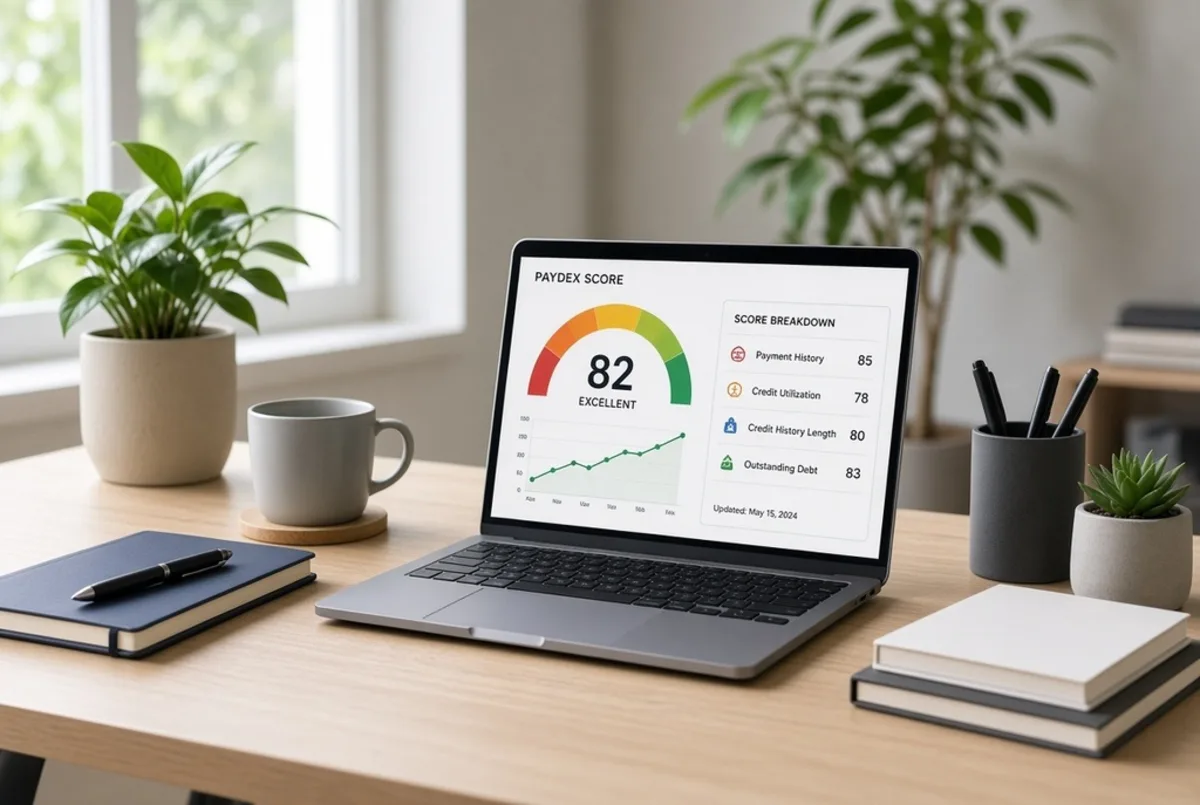
Quick Answer: PAYDEX is Dun & Bradstreet’s 0–100 score for how promptly your business pays its bills. 80 means “pays on terms” — the benchmark buyers and lenders treat as healthy. Above 80 means you pay early; below 80 means you pay late, and the further below, the later. It’s calculated from trade experiences your vendors report to your D&B file.
PAYDEX Score Range & What It Means
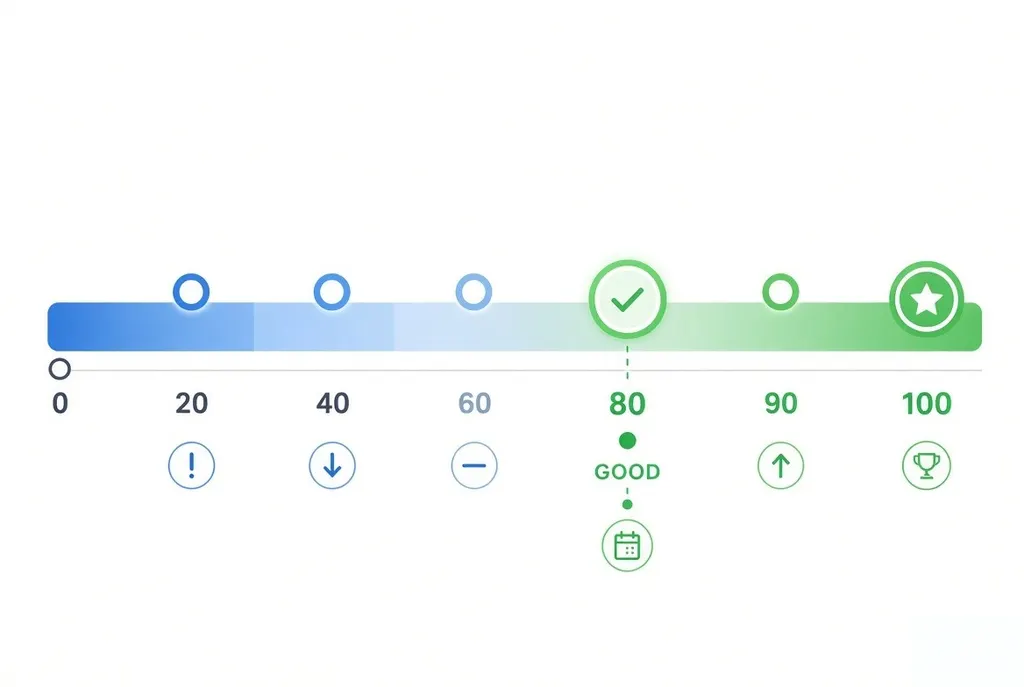
80 is the healthy benchmark. Everything above means early payment. Everything below means late payment. UN means no data yet.
| PAYDEX | What it means | Typical interpretation |
|---|---|---|
| 100 | Pays ~30 days before terms | Strong early-payment signal |
| 90 | Pays ~20 days early | Pays ahead of terms |
| 80 | Pays on terms | Healthy benchmark buyers expect |
| 70 | Pays ~15 days beyond terms | Slightly late |
| 50 | Pays ~30 days beyond terms | Late |
| 40 | Pays ~60 days beyond terms | Significantly late |
| 30 | Pays ~90 days beyond terms | Very late |
| 20 | Pays ~120 days beyond terms | Severely late |
| UN | Unavailable | No trade experiences reported yet |
Score bands verified against Dun & Bradstreet’s official PAYDEX explanation. 80 is the practical target for most businesses.
Credit Insights Free tier shows your score range and file-change alerts at $0.
What PAYDEX Is (In Plain English)
Your PAYDEX score is D&B’s answer to one question: does this company pay on time? It’s built from reported trade experiences — the payment data your vendors supply to D&B about your account with them.
Unlike consumer credit scores, PAYDEX says nothing about your debt levels, age of file, or credit mix. It’s almost purely payment behavior. That’s also why it’s so fixable: change how you pay, and the score follows.
The number lives behind your DUNS number — no DUNS, no file, no score. What a DUNS number is
The PAYDEX Range, Decoded
| PAYDEX | Meaning |
|---|---|
| 100 | Pays ~30 days before terms — the best behavior signal |
| 90 | Pays ~20 days early |
| 80 | Pays on terms — the benchmark. “Good” starts here. |
| 70 | Pays ~15 days beyond terms |
| 50 | Pays ~30 days beyond terms |
| 40 | Pays ~60 days beyond terms |
| 30 | Pays ~90 days beyond terms |
| 20 | Pays ~120 days beyond terms |
| UN | Unavailable — no trade experiences reported (yet) |
Two things people miss:
- 80 is the target, not 100. Prompt payment is the healthy signal buyers expect. Anything above is a bonus, not a requirement.
- “UN” isn’t bad — it’s empty. A new file with no reported vendors shows UN. The fix isn’t better payment; it’s getting payments reported. How trade references work
Who Sees Your PAYDEX (and When It Matters)
- Supplier onboarding teams deciding whether to give you net-30 (or any) terms
- Corporate buyers vetting your business during procurement
- Trade credit and financing decisions where lenders pull D&B
If none of those roles exist in your business life yet, your PAYDEX is a scoreboard with no game attached. Do you need a DUNS number at all?
How PAYDEX Is Calculated
D&B weights your trade experiences by dollar volume and recency. Three consequences follow:
- Big accounts move the score more than small ones.
- Recent behavior counts more — late payments age out of prominence as on-time history accumulates.
- More reporting vendors = more stability. A score built on one vendor’s report swings wildly; one built on eight is robust.
That third point is the most actionable: a business paying perfectly on terms at vendors who don’t report to D&B still shows UN. Payment behavior only counts where it’s visible. Net-30 vendors that report to D&B
How to Improve Your PAYDEX
- Pay on or before terms — everywhere that reports. 80 is purely behavioral. There’s no hack around it.
- Get more reporting vendors. Ask your existing suppliers: “Do you report to D&B?” If they don’t, prioritize ones that do for future accounts. Trade references: the full guide
- Fix file errors. Wrong payment records drag the score unfairly. Credit Insights includes dispute tooling for exactly this. Pricing breakdown
- Watch for the quiet killers: a vendor reporting a disputed invoice as late, or a closed account still reporting old delinquency.
- Check your score free first. The Credit Insights Free tier shows your PAYDEX score range and alerts you to file changes at $0 — before paying for any monitoring. Check your score free
PAYDEX vs the Other Business Scores
| Score | Bureau | What it weighs | Where it matters |
|---|---|---|---|
| PAYDEX | D&B | Payment behavior | Supplier terms, procurement |
| Intelliscore | Experian | Blended risk model | Lending decisions |
| Equifax business scores | Equifax | Credit + public records | Lending decisions |
Buyers pull D&B; lenders often pull Experian or Equifax. Compare all the monitoring services
FAQ — Real Questions, Short Answers
What is a good PAYDEX score?
80. That means you pay on terms, and it’s the benchmark suppliers and buyers treat as healthy. Above 80 means early payment; below 80 means late, with the number dropping as lateness grows.
What is the PAYDEX score range?
0–100, with 80 as the on-time benchmark and “UN” (unavailable) when no trade experiences have been reported to your file.
How do I check my PAYDEX score for free?
D&B’s Credit Insights Free tier shows your PAYDEX score range and sends change alerts, free, no card needed. Check your score free
How long does it take to improve a PAYDEX score?
Payment data updates as vendors report — typically monthly. On-time payments start improving the trend within one to two reporting cycles; a solid recovery from delinquency takes consistent on-time history building over several quarters.
Does paying early boost PAYDEX above 80?
Yes — 90 and 100 reflect paying ahead of terms. But 80 is the benchmark buyers expect; early payment is upside, not a requirement.
What’s the difference between PAYDEX and a D&B Rating?
They’re two different things on your D&B file. PAYDEX (0–100) answers “does this company pay on time?” A D&B Rating (a code like “3A2”) is a financial-strength assessment based on net worth plus an overall credit appraisal — “how big and stable is this company?” Buyers see both; your payment behavior only moves PAYDEX.
Why does my PAYDEX show UN?
No trade experiences have been reported to your D&B file yet. You likely have vendors who don’t report to D&B. The fix: get trade references reporting, not just paying on time. How
Does PAYDEX affect personal credit?
No. Your D&B business file and PAYDEX are separate from your personal credit reports.
Does PAYDEX matter if I don’t want trade credit?
Only if a counterparty checks it — supplier onboarding, procurement vetting, some financing. If nobody pulls your D&B file, your PAYDEX is informational.
The Bottom Line
PAYDEX is the simplest credit score in business: pay on terms at vendors who report, and 80 takes care of itself. Open the file (free DUNS), make sure your payments are visible (reporting vendors), fix what’s wrong (disputes), and watch the trend (the Credit Insights free tier, free). Everything else in D&B’s catalog is optional; the behavior isn’t.