DUNS Number vs EIN vs UEI: The Plain-English Comparison (2026)
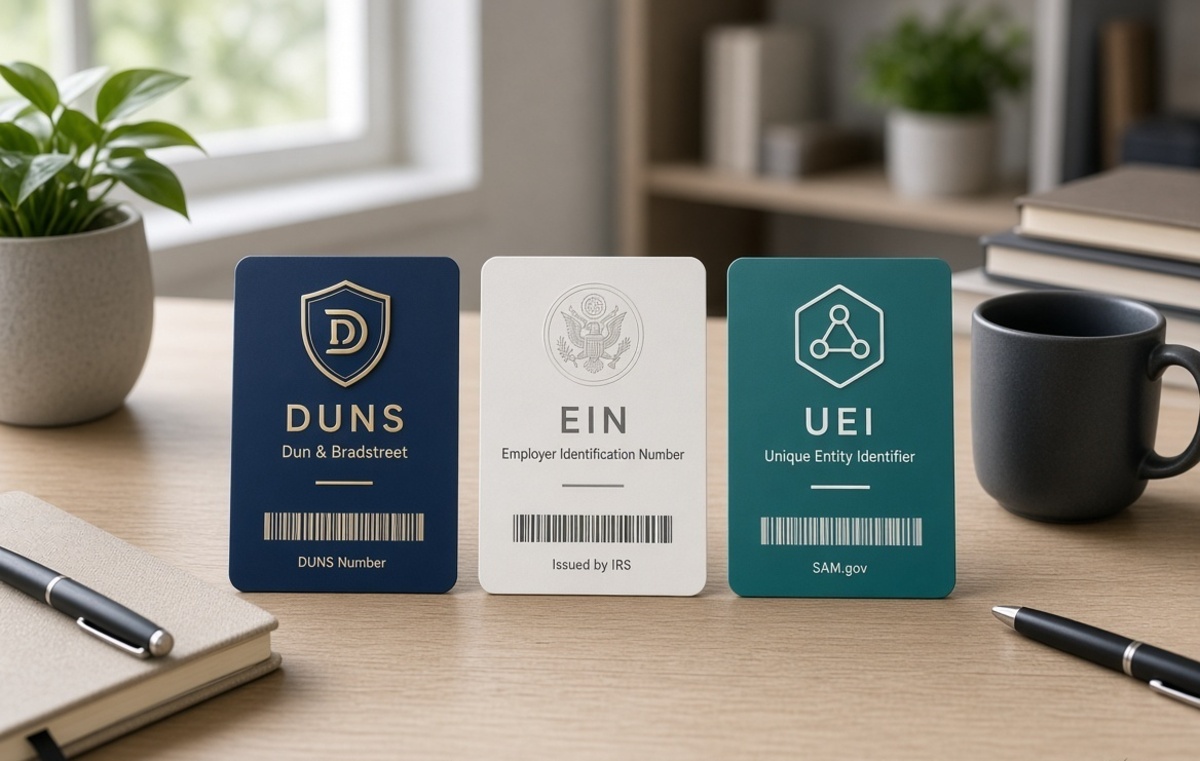
Quick Answer: They’re three different identifiers from three different organizations. The DUNS number (Dun & Bradstreet) opens your business credit file. The EIN (IRS) identifies your business for taxes, payroll, and banking. The UEI (SAM.gov) identifies you for US federal contracts and grants. All three are free, none of them replaces another — and most growing businesses eventually hold all three.
The 30-Second Table
| DUNS Number | EIN | UEI | |
|---|---|---|---|
| Issued by | Dun & Bradstreet | IRS | SAM.gov (GSA) |
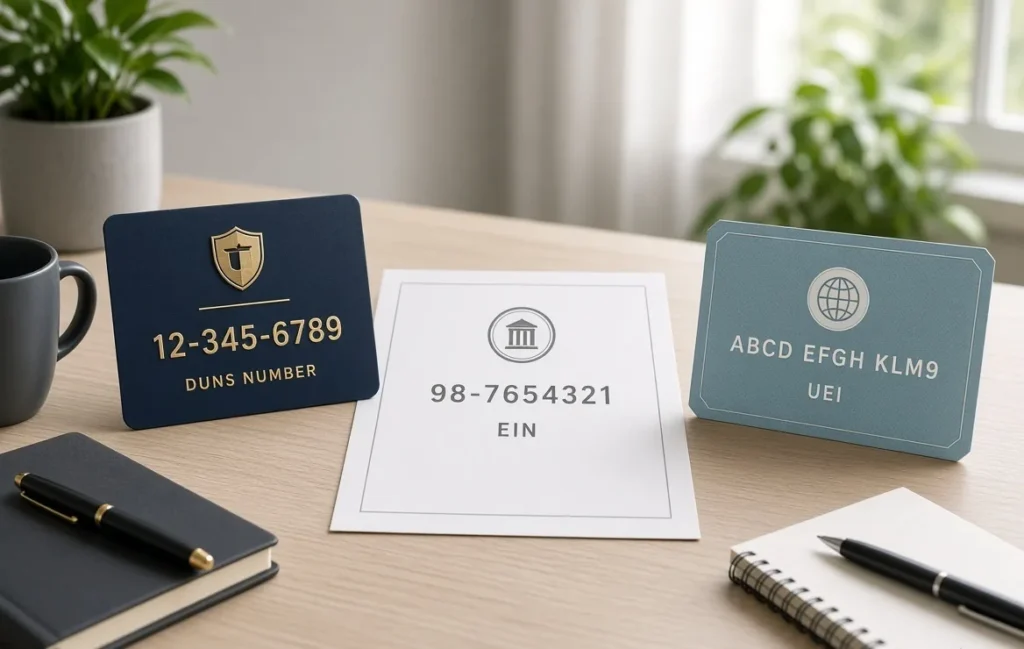
| Looks like | 9 digits | XX-XXXXXXX | 12 characters (letters + numbers) |
| What it’s for | Business credit, supplier systems, app stores | Taxes, payroll, banking | US federal contracts & grants |
| Also called | D-U-N-S | Federal Tax ID | Unique Entity ID |
| Where you’ll be asked for it | Vendor forms, net-30 applications, Apple/Google developer accounts | Bank accounts, payroll, tax filings, loan applications | SAM.gov, Grants.gov, federal subawards |
| Cost | Free | Free | Free |
| How to get it | dnb.com application | IRS online (minutes) | SAM.gov registration |
| Expires? | Never | Never | The UEI is permanent; SAM registration renews yearly |
No, the UEI Is Not a “Renamed” DUNS Number
This is the single most common mix-up — some guides even claim the DUNS number “became” the UEI. It didn’t. The April 4, 2022 switch changed one thing: which identifier the US federal government uses. Your DUNS number wasn’t renamed, replaced, or cancelled. It simply lost one customer — the federal government — while keeping every other one: lenders, suppliers, corporate buyers, and app stores.
Rule of thumb: if the form is federal, it wants your UEI. If it’s commercial, it wants your DUNS. If it’s the IRS or your bank, it wants your EIN.
Why the Government Dropped DUNS (The History Other Guides Skip)
The federal government adopted the DUNS number as its standard entity identifier in the 1990s under a sole-source contract with Dun & Bradstreet. A 2012 Government Accountability Office review flagged the problem: the government was paying a private company millions a year for a proprietary numbering system it didn’t own, couldn’t freely query, and couldn’t subject to FOIA. GSA spent years building a government-owned replacement, and on April 4, 2022, every federal award system switched to the UEI. Entities already registered in SAM.gov were assigned a UEI automatically — nobody had to apply.
That history is why the confusion exists at all: there are now two identifiers because the government built its own rather than keep renting D&B’s.
The DUNS Number: Your Credit-File Key
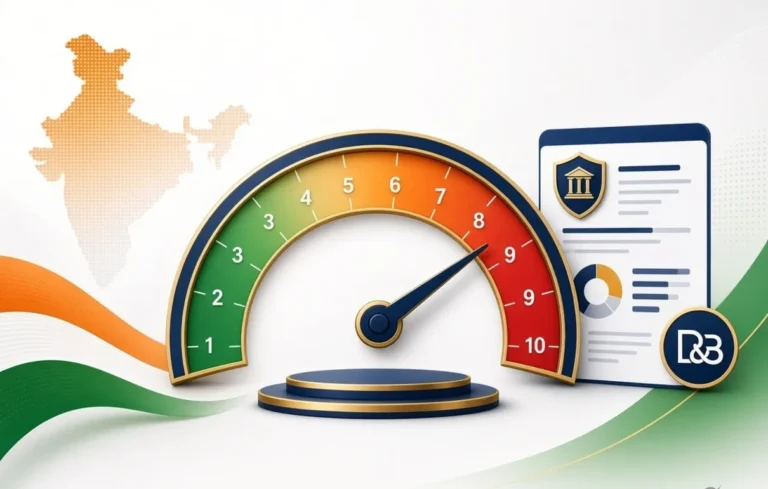
D&B’s nine-digit ID opens your company’s business credit file — the PAYDEX score and payment history that corporate buyers, net-30 vendors, and supplier portals check. It’s also what Apple and Google require for organization developer accounts. What a DUNS number is
Key fact: it’s issued by a private company, not the government — and it’s free. Cost breakdown
The EIN: Your Tax ID
The IRS’s Employer Identification Number identifies your business for federal taxes, payroll, and bank accounts. If you have employees (or a corporation or partnership), you need one — issued free online in minutes at IRS.gov.
The trap: some sites charge to “file for your EIN.” The IRS issues EINs free. Same reseller pattern as DUNS registration fees — don’t pay it.
The UEI: The Government Contract ID
Since April 4, 2022, the Unique Entity ID — 12 characters, issued free inside SAM.gov registration — identifies entities doing business with the federal government: contracts, grants, and subawards. Two details people miss:
- The UEI itself is permanent. It survives even if your registration lapses. What expires is your SAM registration — renew every 365 days or you become ineligible for awards.
- “Registered” isn’t the same as “active.” A submitted registration can take up to 10 business days to activate, longer if validation flags an error. Plan ahead of any bid deadline.
What didn’t change: state and local contracts, and private-sector requirements, still use the DUNS number.
Which Do You Actually Need? (Decision Table)
| Your situation | DUNS | EIN | UEI |
|---|---|---|---|
| Any business with employees or a corporation/partnership | Maybe | Yes | No |
| Selling to corporate buyers / want net-30 terms | Yes | Yes* | No |
| App Store / Google Play organization developer account | Yes | Yes* | No |
| Bidding on US federal contracts or grants | Yes (often still useful) | Yes | Yes |
| Nonprofit applying for federal grants | Maybe | Yes | Yes |
| Building business credit | Yes | Yes* | No |
*Most businesses need an EIN anyway for taxes and banking. Do you still need a DUNS? → the full breakdown
The Order That Saves You Weeks
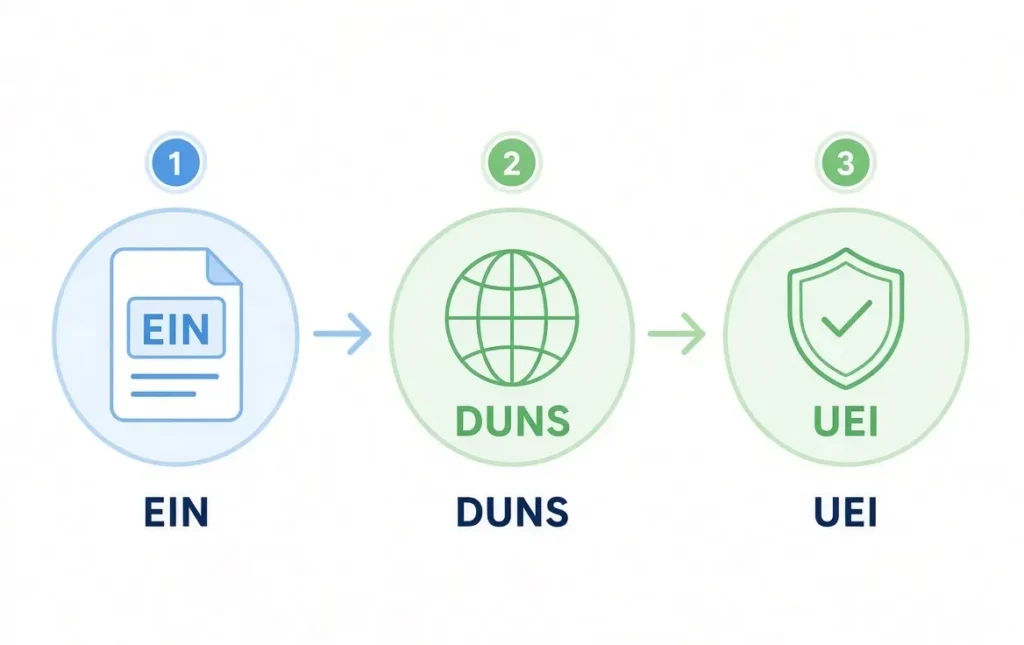
- EIN first. Free, online, minutes. Your bank and SAM.gov both require it, so everything else waits on it.
- DUNS early — before you need it. Free, but the clock is long: roughly 30 business days for the free route. If a corporate buyer asks for your DUNS “this month,” you’re either waiting six weeks or paying $229 to expedite. Apply while it’s still theoretical. Full application walkthrough
- UEI last — only when federal work is real. Free inside SAM.gov registration, but budget up to 10 business days for activation, and set a calendar reminder for the yearly renewal.
Total cost of the full stack: $0. Total effort if you plan ahead: one afternoon plus one reminder.
Where Each One Is Actually Asked For
The real-world answer to “which number does this form want?”:
| The form in front of you | It wants |
|---|---|
| Business bank account or payroll setup | EIN |
| SBA or bank loan application | EIN — plus a D&B file pull behind the scenes |
| Supplier / vendor onboarding portal | DUNS |
| Net-30 credit application | DUNS |
| Apple Developer or Google Play organization account | DUNS |
| SAM.gov registration, Grants.gov application, federal subaward | UEI |
| State or local government contract | Often DUNS — or the state’s own vendor ID |
5 Mistakes That Cost People Weeks
- Name mismatch. Your legal name must match exactly across your formation documents, IRS records, and DUNS application. One stray comma or suffix (“Inc.” vs “LLC”) stalls processing on all three systems.
- Paying anyone for any of the three. EIN “filing services,” DUNS “registration” companies, third-party SAM.gov help desks — the IRS, D&B, and GSA all issue these free directly. Same reseller trap, three costumes.
- Assuming DUNS died in 2022. Only federal systems dropped it. Commercial demand is as strong as ever.
- Entering your EIN where a DUNS is asked. Both are nine digits, so it looks right and fails quietly — vendor portals reject or misfile you. Quick tell: the EIN has a hyphen after two digits (XX-XXXXXXX); the DUNS doesn’t.
- Starting the DUNS clock too late. The free route takes ~30 business days, and most people discover this the week a buyer demands the number. Apply early — patience is free. Is it really free?
Outside the US?
EIN and UEI are US-only. The DUNS number is global — D&B issues it worldwide through country-specific sites (dnb.co.in for India, for example). If you’re an Indian, UK, or EU company applying for an Apple or Google organization account, the DUNS number is the one you need.
FAQ — Real Questions, Short Answers
Is a DUNS number the same as an EIN?
No. The EIN is your IRS tax identifier. The DUNS number is Dun & Bradstreet’s business-credit identifier. Different issuers, different purposes, and most established businesses have both.
Is a DUNS number the same as a UEI?
No. The UEI replaced the DUNS number for US federal contracts and grants in April 2022, but only there. Commercial credit, supplier onboarding, and app-store requirements still use the DUNS number.
Is a UEI the same as a CAGE code?
No. The UEI identifies your legal entity; the CAGE code identifies each physical location that performs contract work (mandatory for Department of Defense contracts). You receive a CAGE code as part of SAM registration — the two coexist, neither replaces the other.
Do I need both a DUNS number and an EIN?
Most businesses need the EIN for taxes regardless. You need the DUNS number only if you’re building business credit, selling to corporate buyers, or opening an organization developer account. Do you need a DUNS?
What replaced the DUNS number?
In federal systems, the UEI (Unique Entity ID from SAM.gov) replaced it on April 4, 2022. Everywhere else, the DUNS number is still the standard.
How much do a DUNS number, EIN, and UEI cost?
All three are free: DUNS from dnb.com (~30 business days, or $229 expedited), EIN from IRS.gov (minutes, online), UEI with SAM.gov registration.
Can I get a DUNS number with just an EIN?
The DUNS application asks for your legal business details — name, address, contact — and many businesses apply right after getting their EIN, but an EIN isn’t what D&B verifies. Match your formation documents exactly and the application goes smoothly. Full walkthrough
Which one do lenders check?
Business lenders commonly pull your D&B file (PAYDEX), Experian Intelliscore, or Equifax business data — not your UEI, which is purely a federal-award identifier.
The Bottom Line
Three identifiers, three systems, one rule: the EIN is universal, the UEI is federal, and the DUNS is commercial credit. Get the EIN when you form your business, start the free DUNS clock before anyone asks for it, and register for the UEI only when federal work is on the table. Total cost of all three: $0.